The web experts since 1999
Often overlooked and populated with manufacturers generic and generally poorly written 'stock information', the humble product description has the power to dramatically boost your sales and increase the number of visitors to your website via Google, Bing and other search engines.
So how do you write a great product description for your website? Below you'll find the do's and don'ts when it comes to writing excellent product copy as well as some tricks of the trade which often get overlooked. Remember, at the end of the day you're writing for the user, not yourself, your boss or search engines, so think about what a user wants from your product description and exceed their expectations.
Don't use manufacturer-provided product descriptions
We know, you're adding hundreds of products to your e-commerce website, and it's much easier to bulk import the descriptions and other stock information direct from your manufacturer. Sadly if you want to stand out from your competition, then you're going to have to rethink your strategy.
The majority of websites take the easy road of using a pre-written product description, so if your product is available from 500 other retailers, that's 500 duplicate content pages floating around the web. Make your site different, set aside an hour or two per day and start writing unique product descriptions which will get your website noticed.
Don't use the same description for multiple products
Even if they are identical with just a simple difference such as product colour, it's essential not to use the same description across multiple products. Each product on your website should be unique, that goes for the product title, description, images and hidden metadata. If you copy and use data multiple times across your website, you may find Google penalises your site for duplicate content. If you're having a tough time writing unique content for your products, they may need combining into a single product listing with product options.
Don't just describe your products
You may be thinking a product description is self-explanatory, a simple paragraph of text describing a product you have for sale. You'd be partially correct however it should encompass much more. Think of a physical shop with salespeople walking the aisles; they don't merely read from the product spec sheet, they are there to answer specific questions you may have and to give you tips and insider information. If you want a successful product page with a high conversion rate, you need to incorporate these things into your copy. Consider adding a few FAQ's to the page, let people know how your product will enhance their life and use emotive language which will help consumers imagine the product is already theirs.
Don't syndicate your product descriptions across other sites
Stop and think before you blindly copy and paste your product information (titles, descriptions and more) into other websites. Yes, it may be quick and easy to get a profile up and running or create a directory listing, but you'll be creating duplicate content which could count against you and your site. If you take the time to write unique descriptions for your website, don't sabotage this work by using the same information on other websites.
Tailor the length of your description to the complexity of your product
Although describing your product isn't the only information you should add to your product description, it's the first piece of the puzzle you should aim to get right.
If you're selling products which are self-explanatory such as t-shirts, batteries or toilet paper, you're in luck; these don't need much explaining because we all know what they are and how they work. If on the other hand, you're selling portable walrus polishing kits, you may need to increase the length of your product description to explain to the reader just what it is you're offering! It's always important to tailor the length of your product description to the complexity of your product. Spend more time on products which aren't seen and used every day, and less time on products we all know and understand.
Make sure your copy is scannable
It's great being thorough, but nobody is going to read a 1000 word block of text unless you're offering to pay them for their time! Most consumers skim pages of information and read chunks of text that they believe answers their specific questions and pain points.
This is why it's crucial to break product descriptions into bitesize chunks, with clear headings, bullet-pointed lists and frequent images which together help the reader skim and digest your product page.
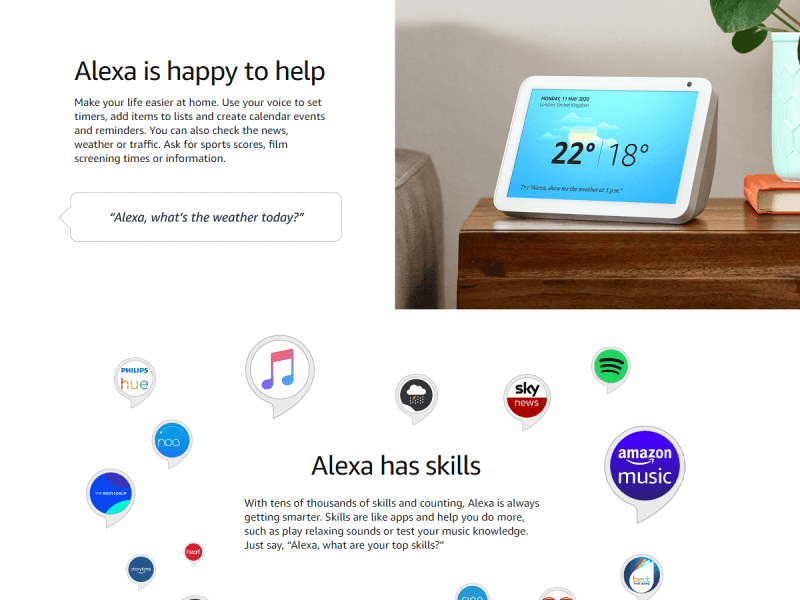
Amazon does this well for its echo devices, with all the information you could need available in bitesize chunks together with relevant imagery. The result is easy to scan, and it's easy to pick out the information you require.
Write copy for your ideal customer
When writing your product descriptions, it's better to write for a particular audience, and that audience should always be your ideal customer. Failure to do this can result in a less focussed description and fewer sales.
Consider creating buyer personas for each product or product category you're addressing and tailor the information, writing style and type of language for them.
Consider things such as demographics, motivations, income and buying habits to better connect with your audience.
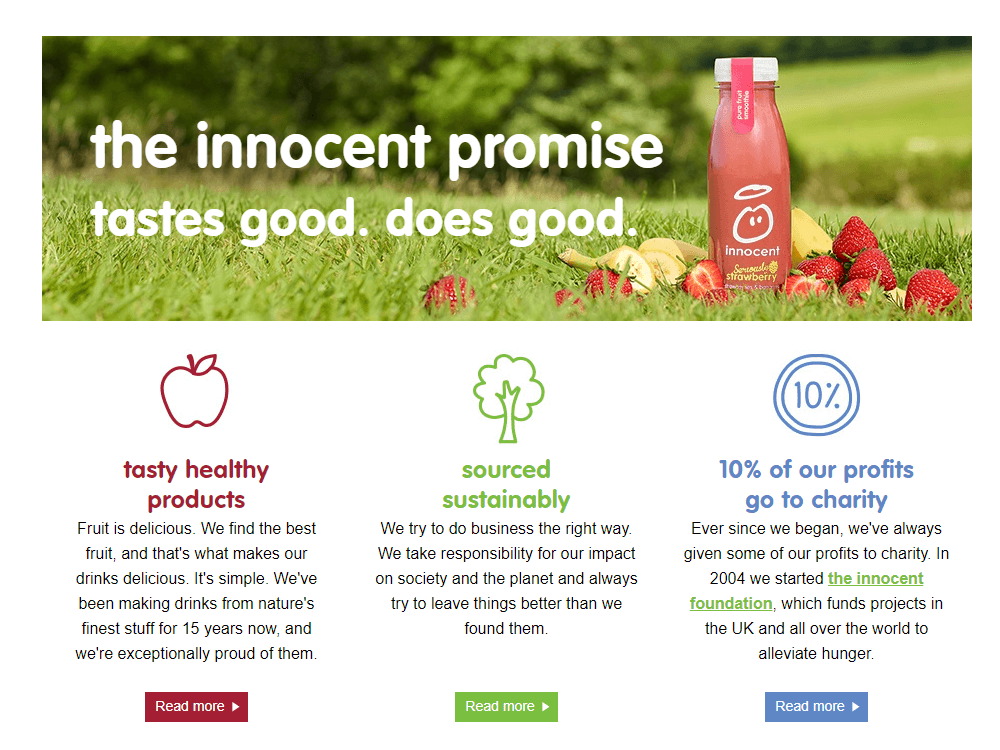
Innocent Drinks have perfected their marketing and appeal to health-conscious individuals who care about the environment and the community in which they live.
Answer common questions and soothe pain points
One of the most considerable barriers to conversion can be a simple question. If a consumer reads your product description and still has questions or doubts that a given product can fulfil their needs, you've failed. Put yourself in the shoes of your ideal customer.
- What questions would they be asking?
- Why are looking to buy this item?
- How does this product make their life better?
Answer these questions with your product copy, and you've won most of the battle.
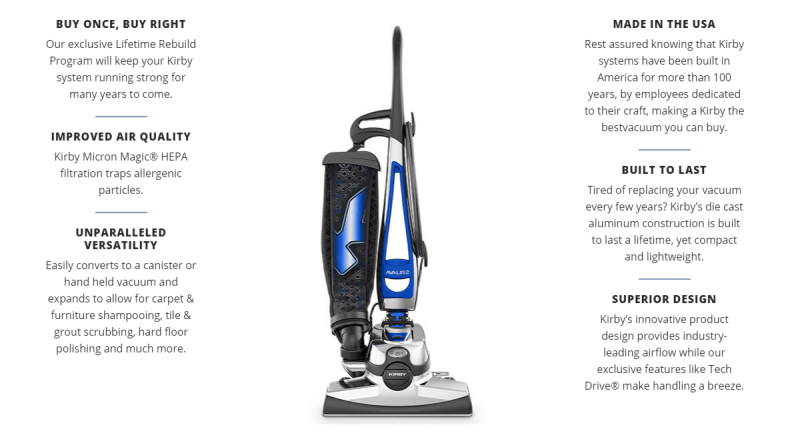
The American based Kirby Vacuum website offers a perfect example of answering customers questions and solving pain points. If you're looking for a new vacuum cleaner, you may have questions and worries such as:
- How long will the new vacuum cleaner last?
- How easy will it be to fix if something goes wrong?
- How easy is it to use?
- Will I be able to clean hard to reach areas?
Kirby allays these fears in a simple, easy, scannable list of features and benefits.
Turn product features into customer benefits
It's easy to fall into the trap of listing product features when writing your product description. After all, isn't this what a potential buyer is looking for? No, a potential buyer is looking for a product to make their life easier, more comfortable or to solve their problems. A consumer wants to know the benefits your product will bring to them. Let's take a look at how this works in practice. The HP product page for their EliteBook 800 Series contains both features and benefits for their business laptop.
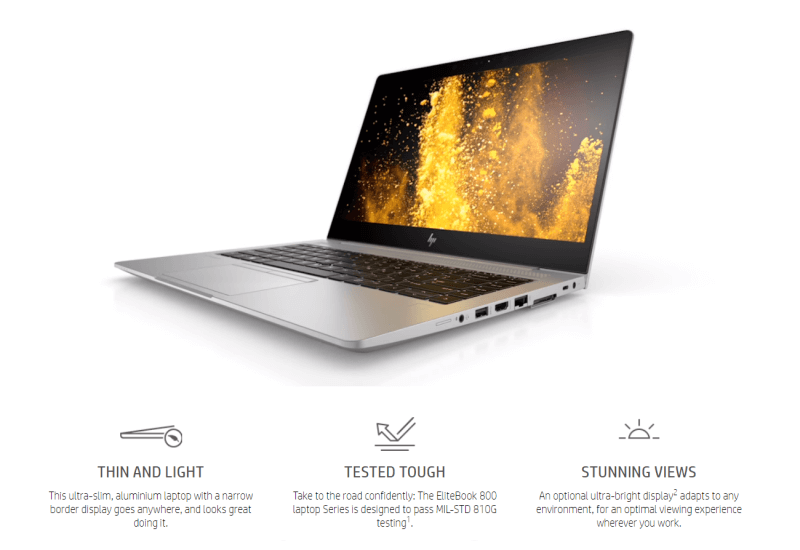
Features
- Thin & Light
- Tough
- Ultra-Bright Display
Benefits
- "goes anywhere, and looks great"
- "Take to the road confidently"
- "adapts to any environment... wherever you work"
By also listing benefits, HP enables the consumer to see the advantages of owning this laptop, a much more powerful and convincing selling technique.
Use influential wording to increase conversion rates
Don't underestimate the power of words. The wording used to describe your products can cause sales to skyrocket or sink faster than a lead balloon. David Ogilvy, the 'Father of advertising', published the following list of influential words back in 1963 and many are still as powerful today as they were then.
- Suddenly
- Now
- Announcing
- Introducing
- Improvement
- Amazing
- Sensational
- Remarkable
- Revolutionary
- Startling
- Miracle
- Magic
- Offer
- Quick
- Easy
- Wanted
- Challenge
- Compare
- Bargain
- Hurry
These influential 'power words' appeal to the emotions of your visitors, and an emotional connection drives sales.
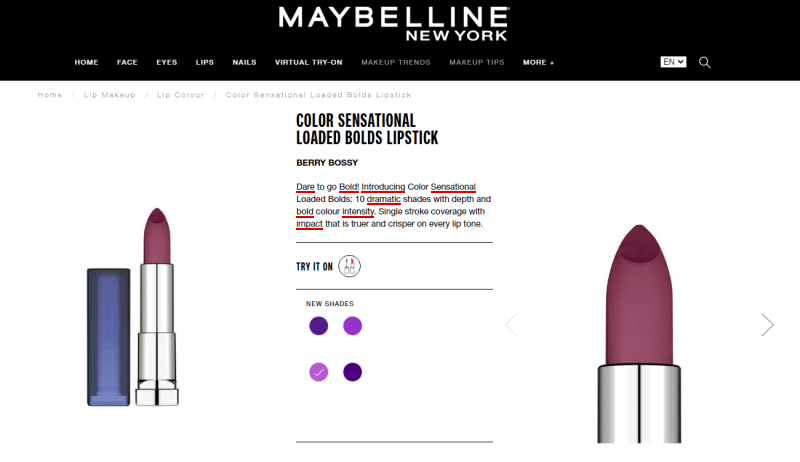
In this great example above, Maybelline uses influential, power wording to describe and sell their lipstick. The words used including 'dare', 'bold', 'sensational' and 'dramatic' all appeal to the visitor's emotions because they not only describe the lipstick, but they also describe the buyer.
Include words and phrases that people REALLY search for
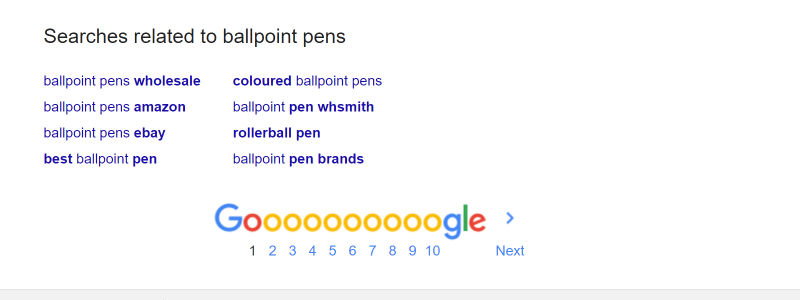
So you're a retailer of ballpoint pens that glide across the page with a silky smooth motion and have the power to transform everyone's handwriting for the better. Great! Now, what are your potential customers typing into Google and Bing to find products like yours? The answers can be surprisingly quick to find if you know where to look. Head on over to Google and perform a search for 'ballpoint pens' and then scroll to the bottom of the results page. You should see a list of related searches.
Now perform the same search on Bing, again you should see a list of related searches at the bottom of the page.
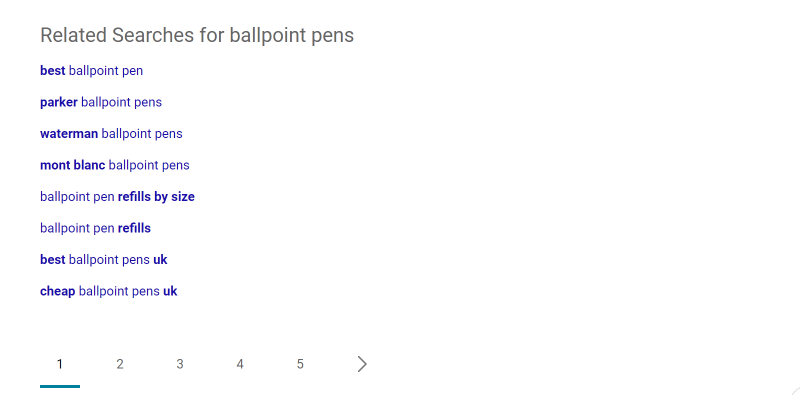
The search terms included in these lists aren't merely random strings containing your search term. Google and Bing return relevant, localised results which their users are actively searching for on their respective platforms. Remember, both Google and Bing are in the search business and win users based on the relevancy of their search results. Use this information to your advantage and include relevant keywords and phrases from these lists in your product text.
Conclusion
Whilst there are always going to be exceptions to these rules, mainly thanks to multi-national corporations with endless pots of cash to throw at advertising, follow the directions above, and you should see increased conversion rates and a boost in site visitors.
Product descriptions don't necessarily have to be lengthy, but to be great, they should be written with your ideal customer in mind and aim to answer questions and solve pain points.
Be clear, relevant and present your content so it's easy to read and digest and you'll never be far from the mark.